SpatialMap
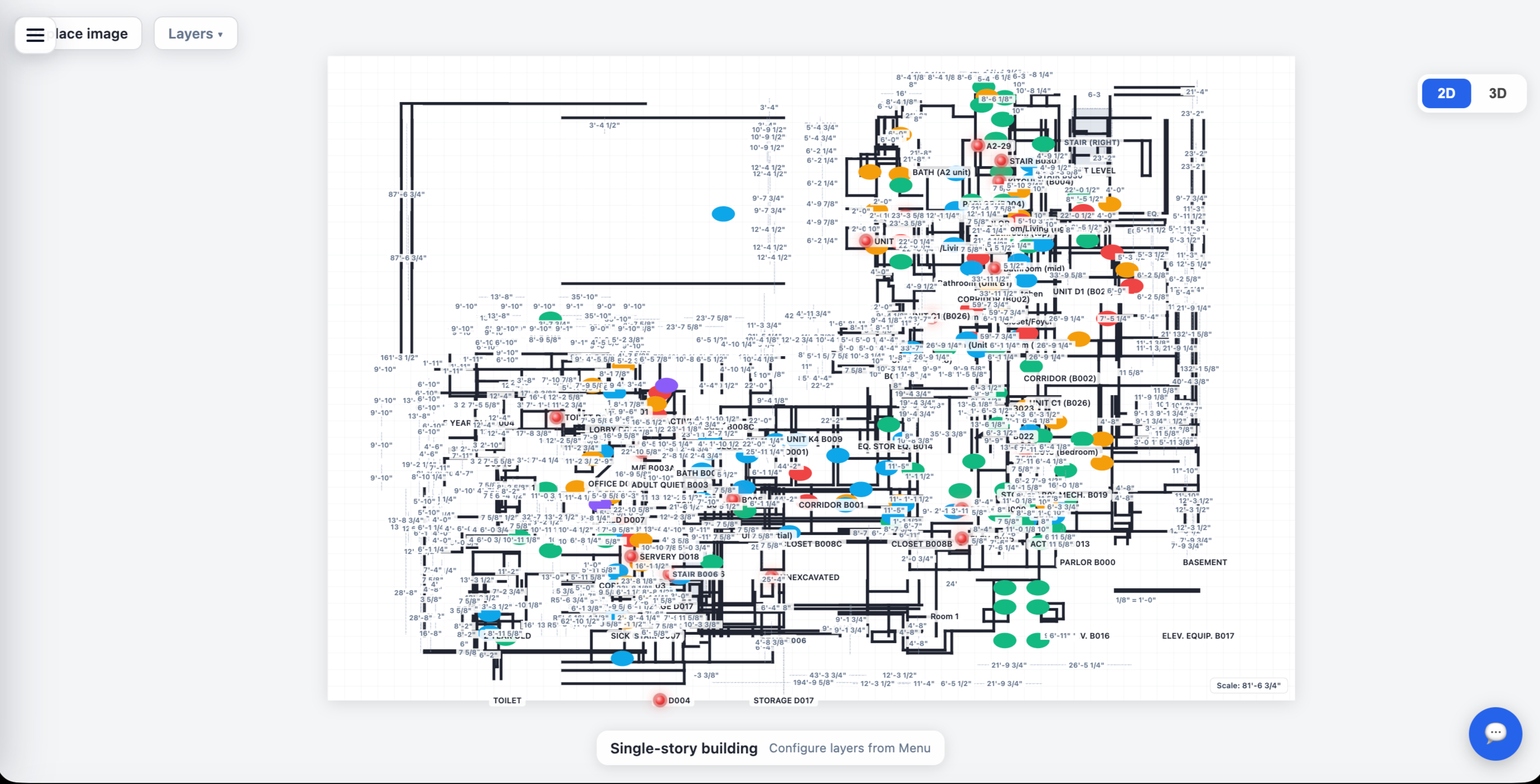
Document structure and spatial reasoning.
Outcome
Extracts structured meaning from documents and layouts.Innovation
Object-aware document interpretation grounded in page position and layout.Stack
Vision · NLP · Spatial Analysis · OCR · EmbeddingsSpatialMap treats a document as a field of objects, boundaries, reading paths, and relationships rather than a flat block of text.
Problem
Most document tooling captures words but loses structure.
- Tables dissolve into paragraphs.
- Labels lose connection to values.
- Headers stop informing hierarchy.
- Position stops carrying meaning.
For forms, reports, logistics paperwork, and operational documents, that missing geometry is the difference between readable output and usable data.
Approach
SpatialMap combines OCR, layout analysis, and semantic labeling into one extraction pass.
| Layer | Purpose |
|---|---|
| Detection | Finds text blocks, tables, signatures, checkboxes, stamps, and regions |
| Layout graph | Connects nearby objects by reading order, overlap, containment, and alignment |
| Semantic pass | Labels blocks by likely role: title, field, value, note, total, exception |
| Export | Produces structured JSON for downstream systems |
Why it matters
The system is designed for documents where where something appears is nearly as important as what it says.
- Insurance and claims packets
- Route manifests and dispatch documents
- Compliance forms
- Operational runbooks and checklists
- Mixed-layout PDFs generated by older systems
Outcome
SpatialMap makes messy documents queryable, auditable, and automation-ready.
Instead of asking teams to manually interpret each page, it turns layout into signal and preserves the structure required for search, workflow, and review.