LogMap
Multi-modal track-and-trace for sea and land logistics.
Outcome
Gives customers and operations teams one live map for multi-modal track-and-trace across shipments, orders, and exceptionsInnovation
An event-linked logistics graph that normalizes multi-modal data and wraps external tracking platforms for unified visibilityStack
Python · Event Processing · Geospatial · APIs · FourKites · PostgreSQL · Observability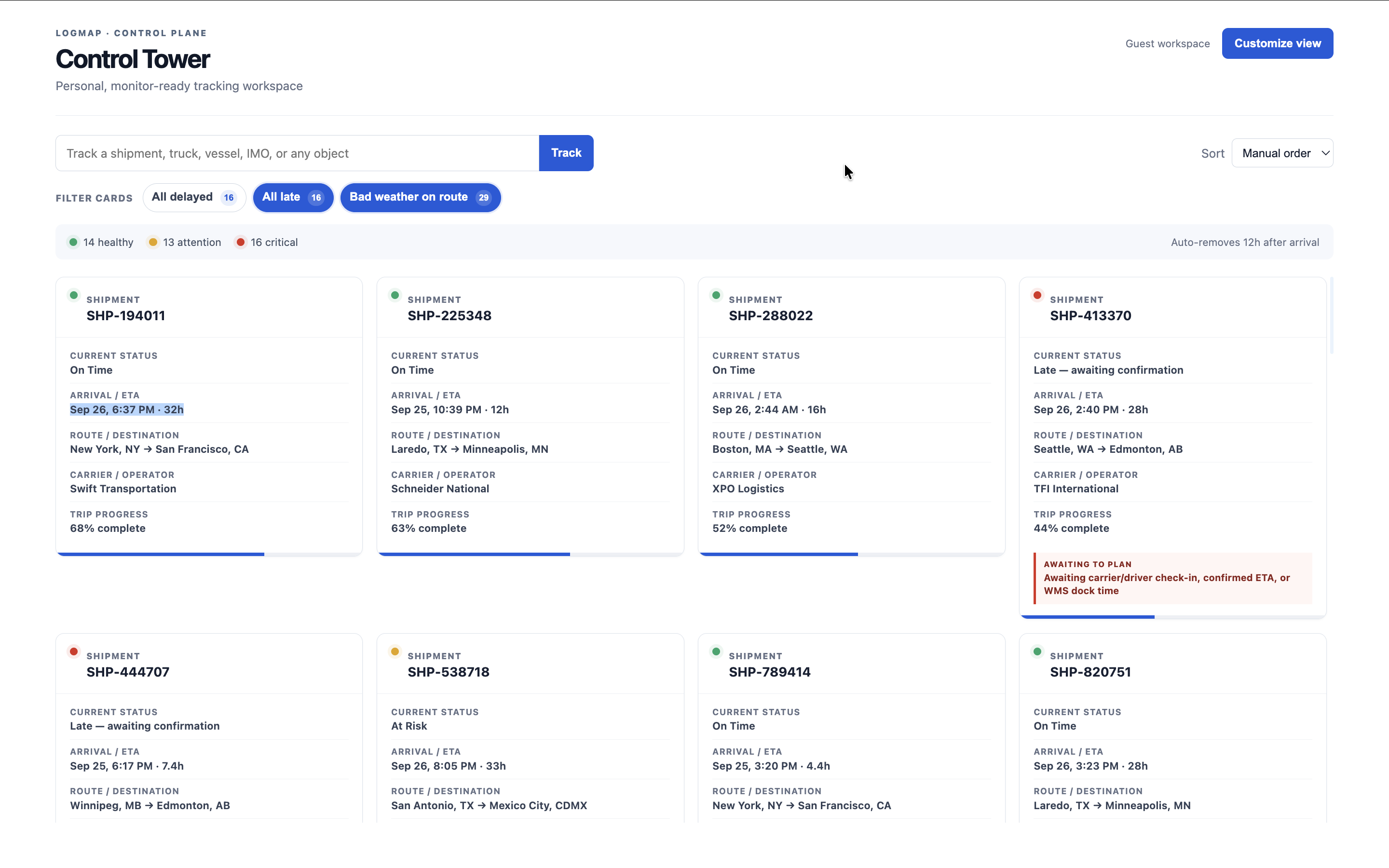
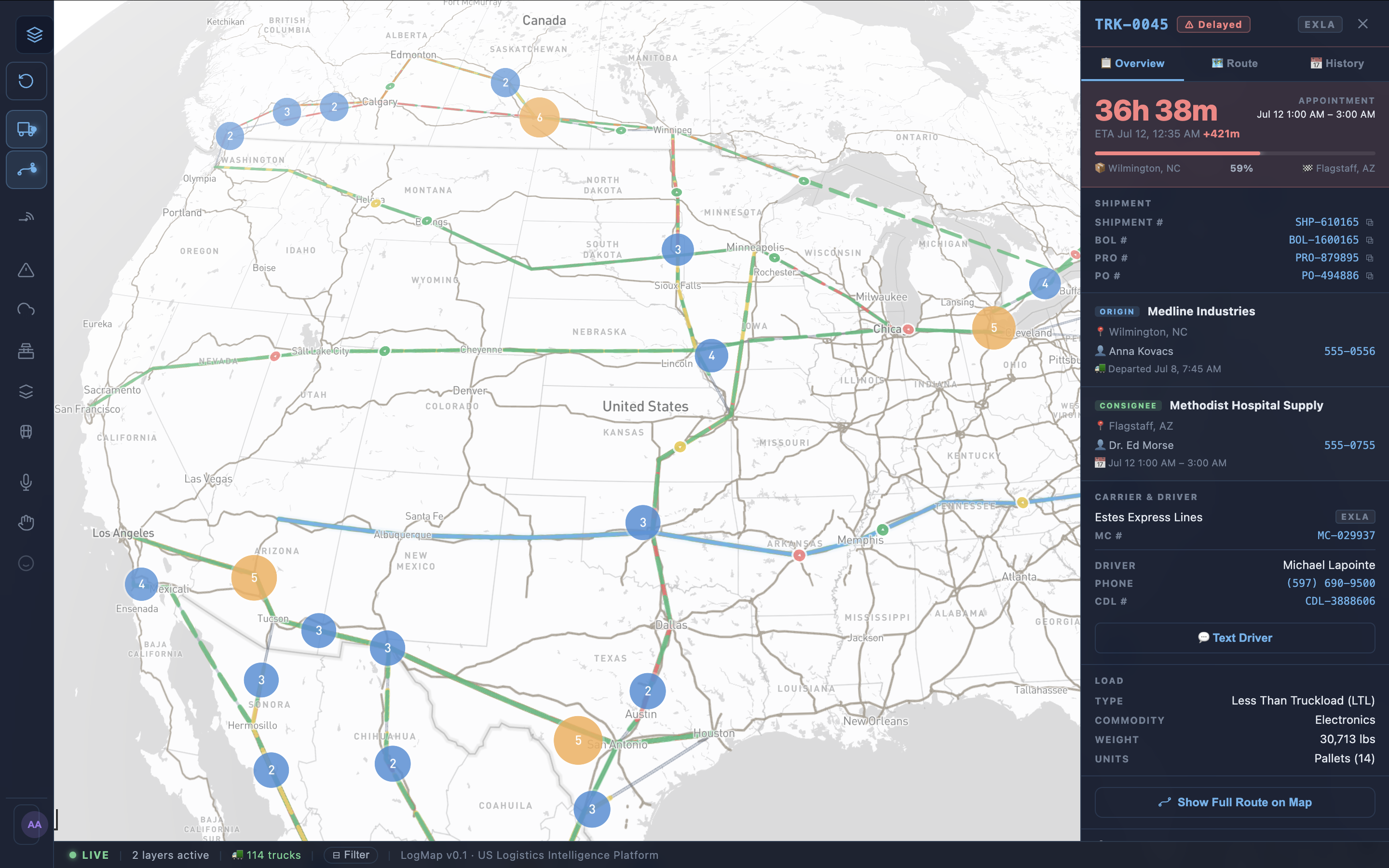
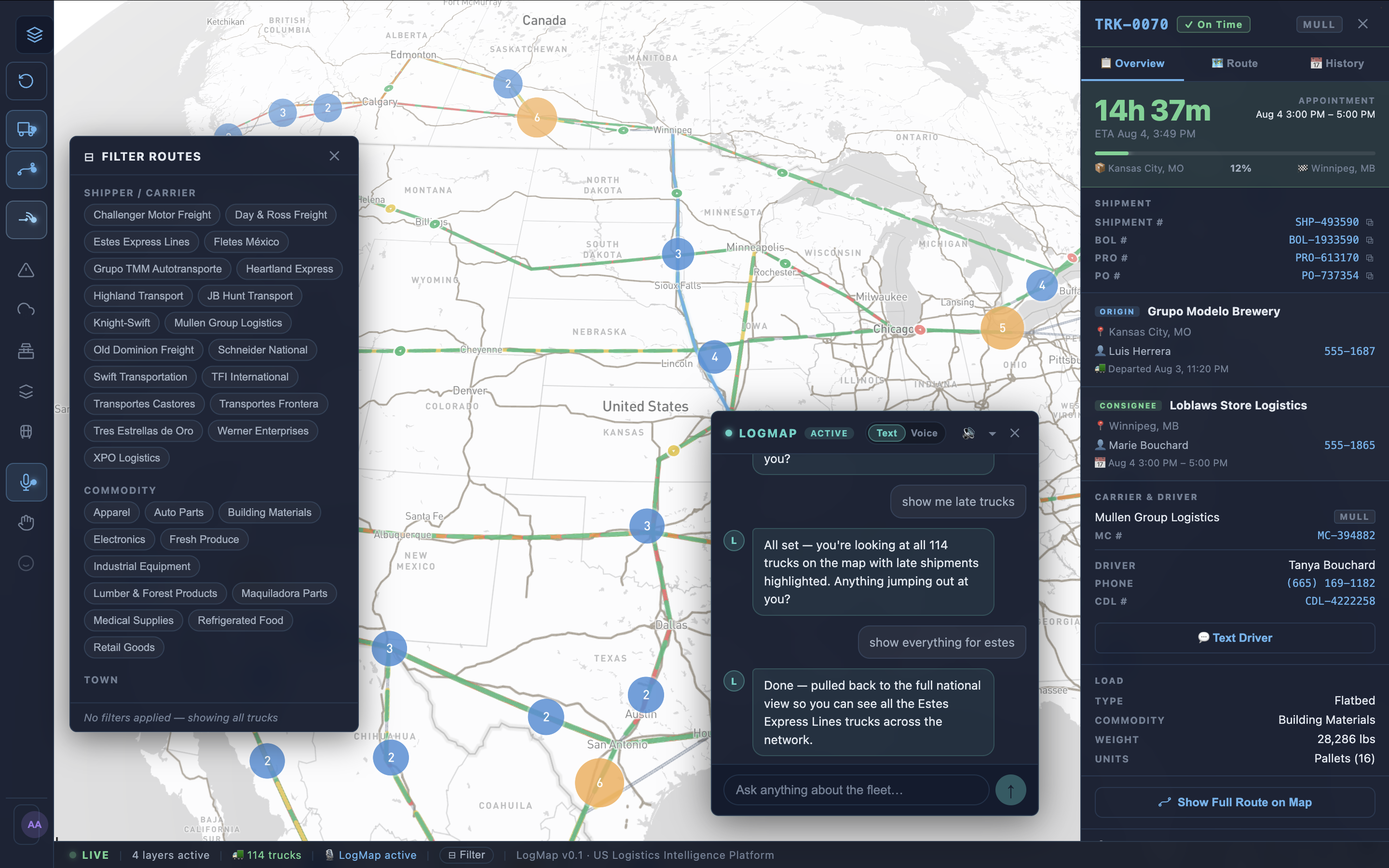
LogMap is a UI-forward logistics map built around a simple idea: track-and-trace should not depend on which channel, transportation mode, or tracking provider a customer uses.
Phone, web, portal, email, chatbot, and internal operations tools often expose different slices of the same shipment lifecycle. LogMap unifies them into one spatial and event-aware system so customers can self-serve while teams keep a technical view of what is actually happening.
It is designed for logistics teams managing multi-modal sea and land movement, where status clarity, exception handling, and a strong customer interface matter just as much as the underlying event pipeline.
The Problem
Traditional logistics tracking breaks down when status data is fragmented.
- Carrier and third-party tracking feeds update on different schedules.
- Customer-facing channels present inconsistent statuses.
- Exception events are visible internally but not understandable externally.
- Teams need integrations that extend platforms such as FourKites without exposing fragmented provider data to customers.
- Service teams become the fallback interface for simple “where is it?” requests.
That creates avoidable call volume, low customer confidence, and weak exception handling.
The LogMap Approach
LogMap builds a shared logistics map from order, shipment, carrier, external tracking platform, and event data.
- Integrate carrier feeds and tracking platforms, including FourKites, through purpose-built wrappers.
- Ingest milestones, scans, carrier updates, order events, and support signals.
- Normalize those events into one shipment timeline across transportation modes and providers.
- Resolve location, status, dependency, and exception context.
- Publish the same truth to every customer and operator channel.
- Preserve a graph of shipment history for pattern analysis and operational learning.
Multi-Modal, Multi-Channel Track-and-Trace
The most important product outcome is multi-channel self-service track-and-trace.
LogMap is intentionally UI-forward: the same shipment state can be presented clearly across customer and operator surfaces without losing operational fidelity.
| Channel | Customer experience |
|---|---|
| Web portal | Live shipment state, location, ETA, and next milestone |
| Chat and virtual assistant | Natural-language shipment lookup with status-aware responses |
| Email links | Deep links into a current shipment view instead of stale messages |
| Contact center | Same trace map with richer operational detail and exception context |
| Internal ops tools | Fleet, carrier, and node-level visibility across many shipments |
Because every channel reads from the same operational map, customers can move between self-service and assisted support without restarting the conversation.
That matters especially in multi-modal sea and land logistics, where handoffs, port events, yard transitions, linehaul movement, and final-mile updates all need to remain legible to both customers and operators.
FourKites Integration Wrappers
LogMap includes wrappers for FourKites that make its tracking data available within the same product and operating model as native carrier, order, and support data. The wrapper layer translates provider-specific responses into LogMap’s shared shipment, location, milestone, and exception model.
- FourKites-connected shipment and milestone retrieval
- Normalized status and location data for customer-facing surfaces
- Provider details retained for operations and integration troubleshooting
- A reusable integration boundary for additional track-and-trace platforms
System Model
LogMap is not just a tracker. It is a logistics state model.
LogMap system diagram

Carrier feeds + FourKites + OMS + WMS + support events
  ↓
Normalization + event resolution
  ↓
Shipment graph + location state + exception engine
  ↓
Portal + chat + email links + contact center + ops console
1. Unified shipment graph
Each shipment is connected to orders, facilities, carriers, route segments, scans, and exceptions.
- order-to-shipment relationships
- stop and node mapping
- carrier event normalization
- cross-system identity resolution
2. Exception-aware trace
Track-and-trace becomes genuinely useful when it reflects uncertainty, delay, and operational drift.
How LogMap handles disruption
ETA drift, missing scans, or handoff failures trigger the flow.
Rules and event context identify the type, severity, and likely cause.
Self-service channels receive the same updated message and next step.
High-risk or unresolved cases move to support with full shipment context.
- delayed handoff detection
- failed delivery and return loops
- stale scan identification
- missed milestone escalation
3. Shared visibility surface
The same state model drives both customer-friendly explanations and technical operational screens.
- simpler self-service responses for customers
- deeper detail for agents and dispatch teams
- consistent status language across channels
- reusable audit trail for claims and service review
Why It Matters
Multi-channel self-service track-and-trace reduces support load while improving trust.
For customers, the value is clarity. For operations, the value is one map that connects shipment state, geography, and exceptions. For leadership, the value is fewer manual interventions and a more scalable post-purchase experience.
For the product itself, the value is a better interface: a logistics map that makes sea and land movement understandable without forcing users to interpret raw carrier events on their own.