BusMap
Transit Route Intelligence Platform
Outcome
Improve route visibility, planning, and operational performance through spatial analysis and real-time trackingInnovation
Operational mapping with optimization feedback loops and route-aware analyticsStack
Python · Geospatial Analysis · Routing · PostgreSQL · Mapping · Optimization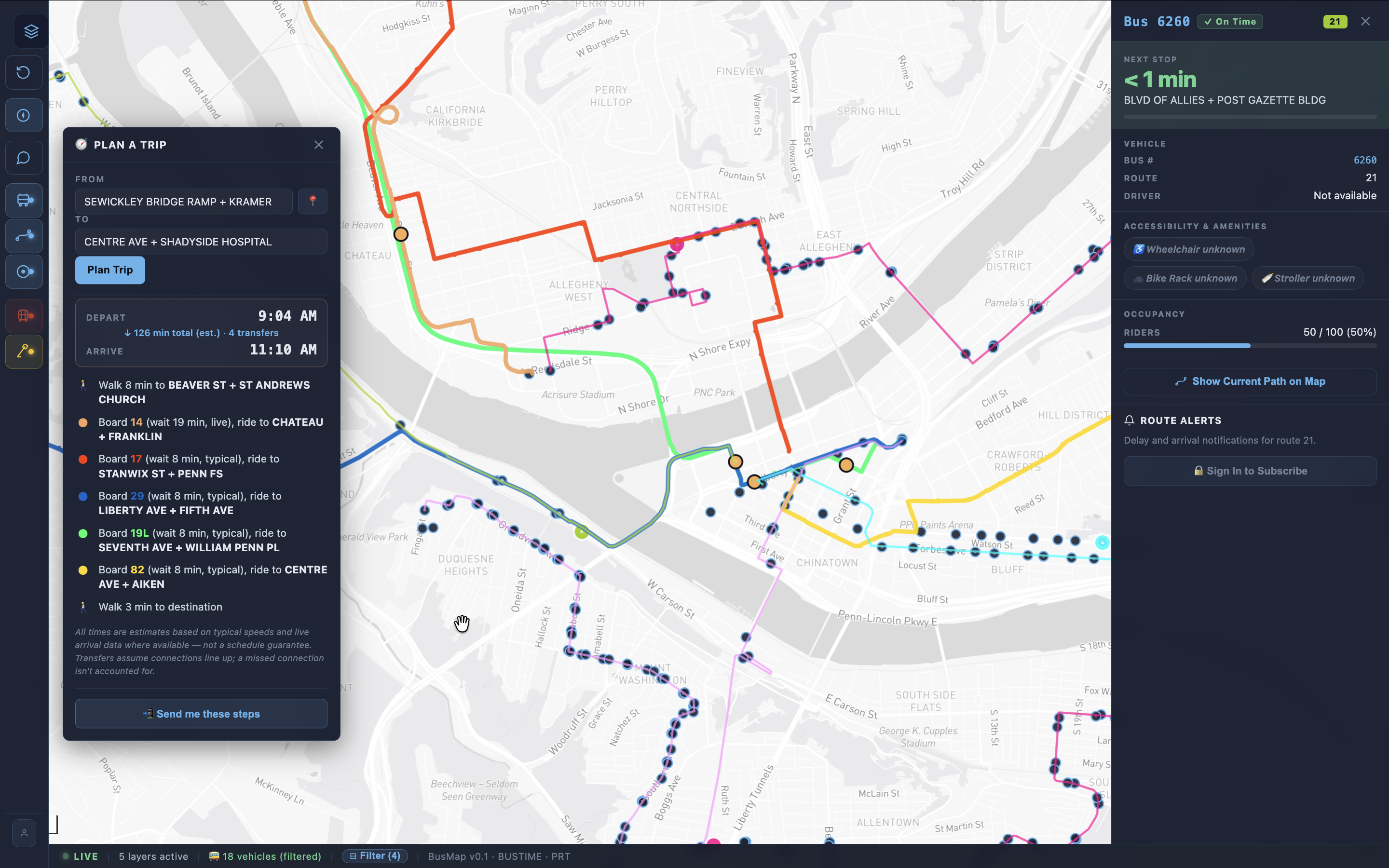
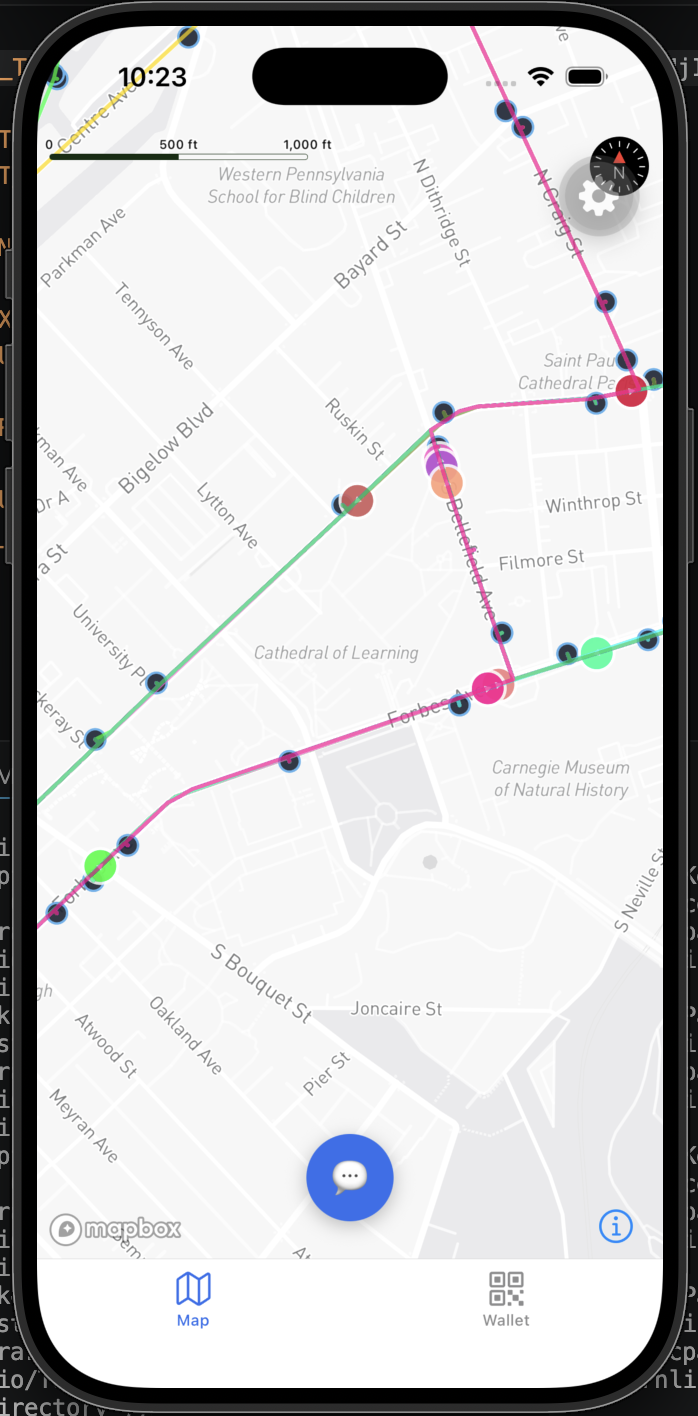
BusMap turns route operations into a visible, analyzable, and optimizable system.
Transit organizations often know where vehicles should be, but not always how actual route behavior, dwell patterns, service gaps, and operational drift accumulate across a network. BusMap closes that gap.
The Challenge
- Low visibility across route performance and exceptions
- Fragmented data from GPS, schedules, dispatch, and planning tools
- Slow diagnosis when service quality degrades
- Manual planning loops that do not adapt quickly to real conditions
The BusMap Approach
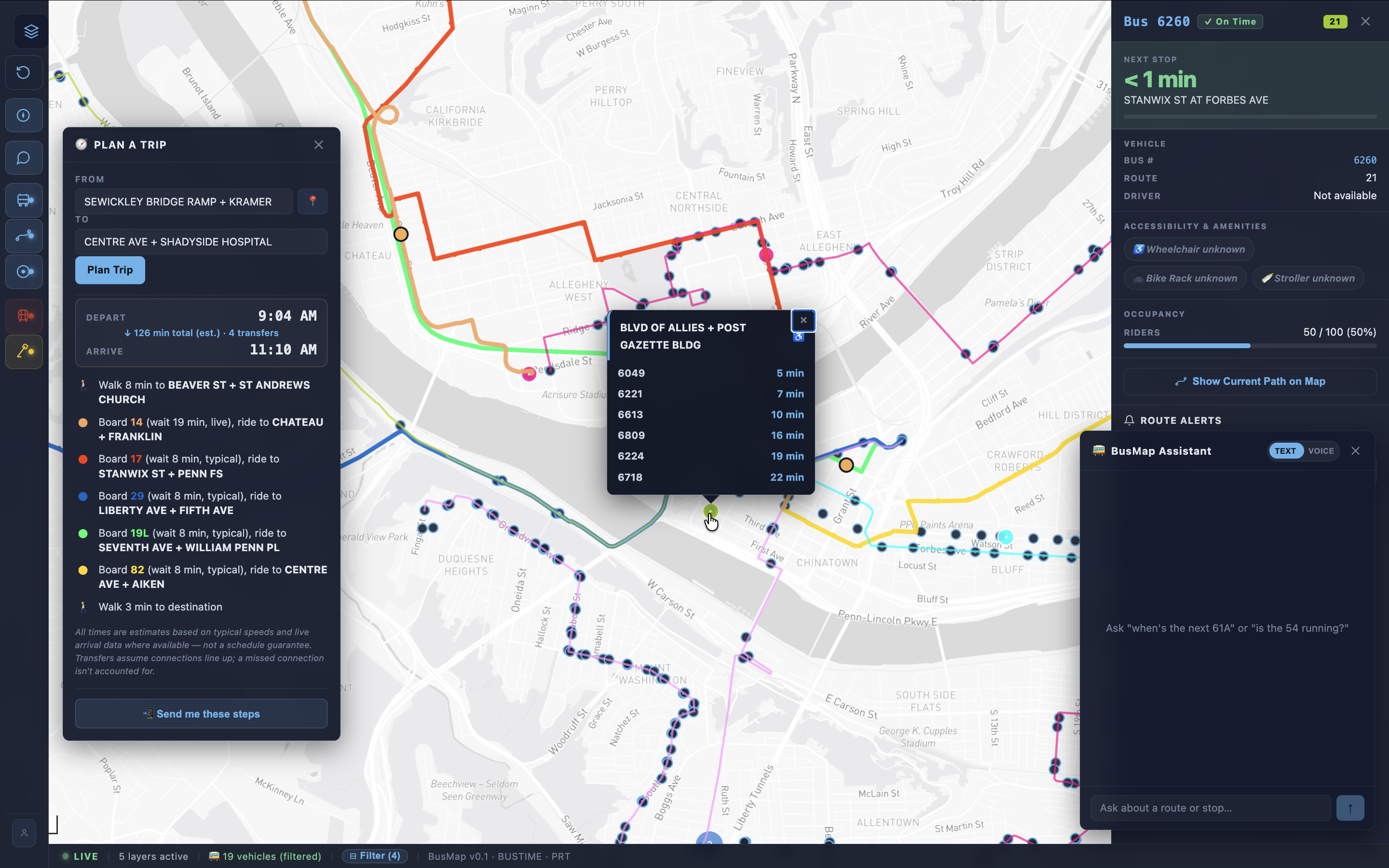
BusMap combines mapping, operational telemetry, and route analytics into one decision surface:
- Track vehicle movement against expected service patterns
- Compare planned routes against actual behavior
- Detect gaps, bottlenecks, and persistent anomalies
- Model alternative route structures and operating assumptions
- Support planning with evidence rather than snapshots
Core Capabilities
1. Route Tracking
BusMap captures route execution as a time-and-space problem, not just a static map.
- Real-time vehicle position overlays
- Historical replay of route behavior
- Stop-level and segment-level analysis
- Pattern detection for delays, drift, and inconsistency
2. Service Analysis
Operational quality becomes measurable at the route level.
- Headway consistency review
- Travel-time and dwell analysis
- Coverage and redundancy inspection
- Corridor performance summaries
3. Planning Support
BusMap is not only retrospective. It is designed to support route redesign and operational improvement.
- Candidate alignment testing
- Demand-aware route comparisons
- Service simplification opportunities
- Constraint-aware tradeoff evaluation
Why It Matters
Transit networks are dynamic systems. When teams can see actual movement patterns clearly, planning becomes faster, operational conversations become more concrete, and service changes become easier to justify.
BusMap helps make network behavior legible.